
What is Adalat AI and How Does It Work?

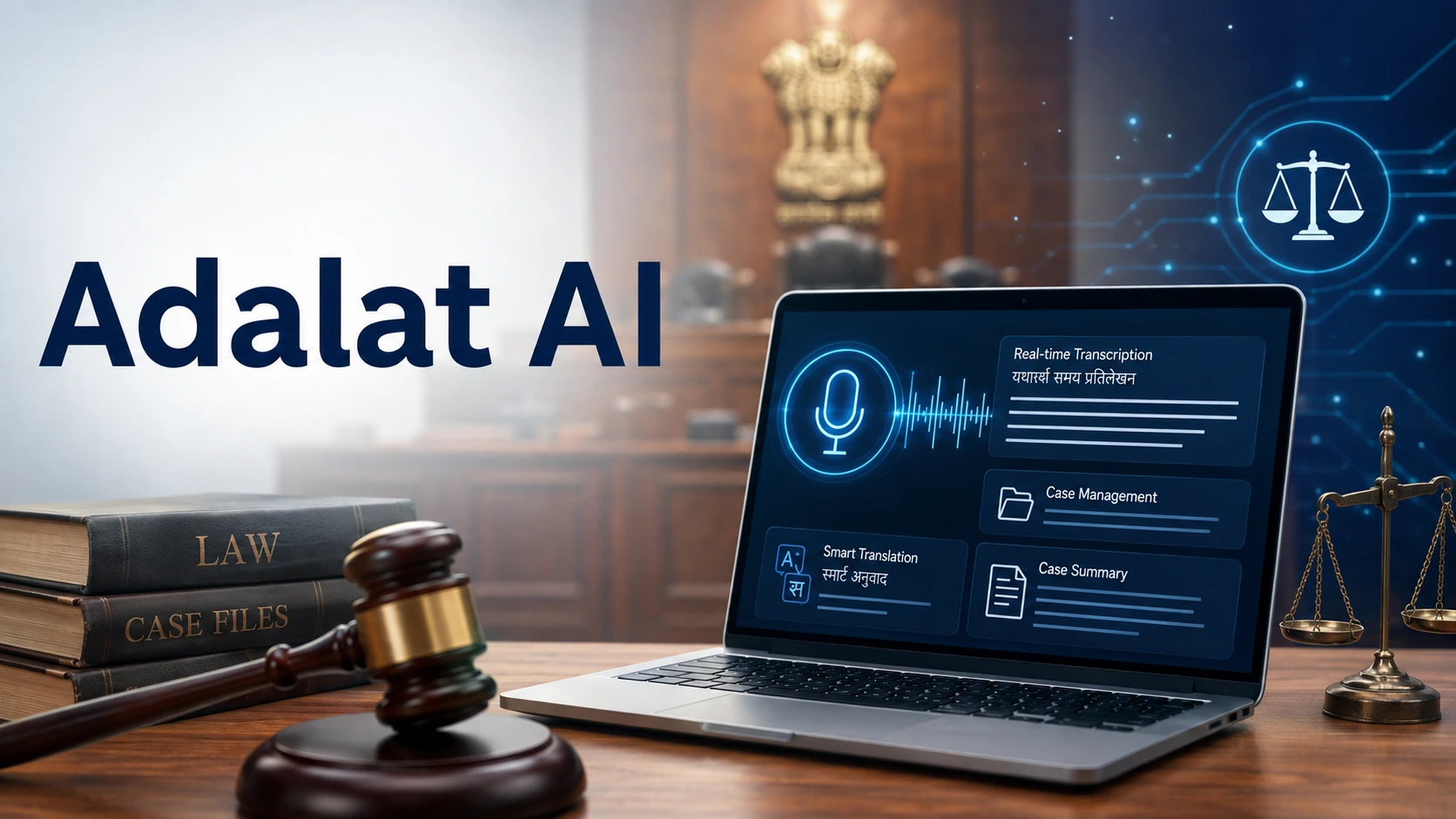
Adalat AI is a homegrown Indian Artificial Intelligence platform built to speed up court work. It listens to court hearings, transcribes speech into text in real time, and organizes case files digitally. Founded by Utkarsh Saxena and Arghav Bhattacharya under the LEGSYS.AI TECHNOLOGY FOUNDATION, its main goal is to clear the massive backlog of pending cases in Indian district courts.
Whenever we hear the word “court-kachahari,” what is the first thought that comes to mind?
Endless dates. Piles of dusty paper files. Lawyers arguing. And ordinary people waiting years just to get a simple order passed.
We see this in movies, but it is a harsh reality across India. A regular case can drag on for decades. Sometimes recording a witness statement takes weeks. Other times, getting a signed copy of a judgment takes months.
Can modern technology fix this broken system?
Yes, it can.
Today, let’s talk about Adalat AI. It is an Indian AI startup that is quietly changing how our courts operate every day.
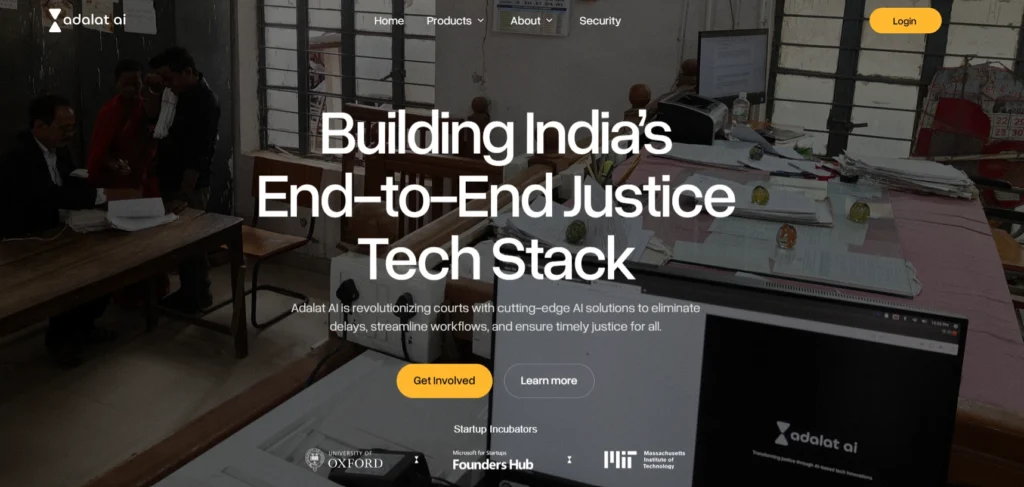
The Story Behind Adalat AI
Even the Supreme Court has raised concerns about millions of pending cases in lower courts. The pressure on our judges is immense.
To tackle this massive challenge, two young Indian entrepreneurs stepped up: Utkarsh Saxena and Arghav Bhattacharya.
They built Adalat AI under the LEGSYS.AI TECHNOLOGY FOUNDATION.
Their vision is very simple: use practical artificial intelligence to remove clerical delays, speed up hearings, and make justice accessible to everyone.
What Actually Slows Down Our Courts?
When a judge sits on the bench, legal arguments are only half the battle. The other half is dealing with painful manual paperwork:
- Shortage of Stenographers: Most district courts do not have enough typists. Judges often have to write long orders and notes by hand all day.
- Messy Handwriting: When a judge gets transferred, the next judge struggles to read their handwritten notes. Time gets wasted just trying to decipher words.
- Piles of Missing Papers: A single courtroom handles over 100 cases a day. Court staff spend hours searching through physical bundles just to find one old document.
- Language Barriers: India has many regional languages. Translating documents manually takes weeks.
These small clerical delays add up and keep ordinary citizens waiting for years.
How Does Adalat AI Work?
Adalat AI is not hype. It is a practical tool built for real courtroom problems. Here is how it works:
1. Real-Time Speech-to-Text
When a witness speaks or a lawyer argues in court, Adalat AI listens carefully. It turns spoken words into accurate text on the screen instantly in their own language.
Judges do not have to write notes by hand anymore. This saves hours of court time every single day.
2. Case Flow Management System
Think of this as a smart digital workspace for judges.
Instead of flipping through paper files for 100 cases, the judge gets everything on one screen. Past orders, hearing dates, and evidence are available with a single click.
3. Smart Translation and Summaries
The platform can translate legal documents across Indian languages. It can also read long, 200-page charge sheets and generate a clean, short summary of key facts. This helps judges and lawyers prepare much faster.
Available as a Mobile App
Adalat AI is not locked inside expensive courtroom hardware. It is also available as a lightweight mobile app:
- Offered by: LEGSYS.AI TECHNOLOGY FOUNDATION
- App Version: 3.0.2
- Download Size: Around 58 MB
- Compatibility: Android 7.0 and above
- Downloads: 5,000+ on Google Play Store
Because it is lightweight, court staff and legal professionals can run it smoothly even on basic Android smartphones.
What Does This Mean for the Common Man?
At the end of the day, faster courts mean faster justice for everyday citizens:
- Cases that drag on for 5 years just because of clerical work can wrap up much sooner.
- Digital records mean files cannot be misplaced or damaged.
- Everything remains transparent, reducing unfair delays.
- People spend less money on endless legal visits.
Final Thoughts
AI is not just about cool chatbots or making digital art. The real power of AI lies in solving painful everyday problems that affect millions of lives.
Adalat AI proves that Indian engineers can build world-class tech for Indian challenges.
If tools like this reach every district court across the country, the painful era of “tarikh pe tarikh” could finally come to an end.
Frequently Asked Questions (FAQ)
What is AI Adalat?
AI Adalat (Adalat AI) is an Indian legal-tech platform built by LEGSYS.AI Technology Foundation.
It assists judges, court staff, and litigators by converting spoken courtroom testimony into real-time text and providing automated digital case management to speed up pending litigation.
Is an AI lawyer allowed in court?
No. Under current Bar Council of India regulations and procedural law, autonomous AI systems or “AI lawyers” cannot practice law or represent clients in an Indian courtroom.
AI tools like Adalat AI act strictly as administrative assistants for transcription, legal research, and case docket management.
Who is the founder of Adalat AI?
Adalat AI was co-founded by lawyer and economist Utkarsh Saxena (CEO) and software engineer Arghya Bhattacharya (CTO).
What is Adalat AI’s funding status?
Adalat AI operates through the non-profit LEGSYS.AI Technology Foundation. It has received financial backing and ecosystem grants from accelerator programs including Y Combinator, Fast Forward, and non-profit tech grants.
Where can I find the Adalat AI app download?
The Adalat AI app is distributed on the Google Play Store (listed under LEGSYS.AI TECHNOLOGY FOUNDATION), requiring Android 7.0 and up.