
Runway Gen-3 Alpha Review: Is It Better Than Sora AI?

The AI video generation landscape has evolved from an experimental novelty into a high-stakes arena for professional creators.
If you are producing commercial ads, short films, or social media campaigns, two heavyweights dominate your options: OpenAI’s Sora and Runway’s Gen-3 Alpha.
While both tools generate jaw-dropping outputs from simple text prompts, they target entirely different workflows. Choosing the wrong platform can drain your creative budget and cost you precious production hours.
Let’s look past the viral trailers and dive into an honest, feature-by-feature comparison.

1. Video Quality & Cinematic Realism
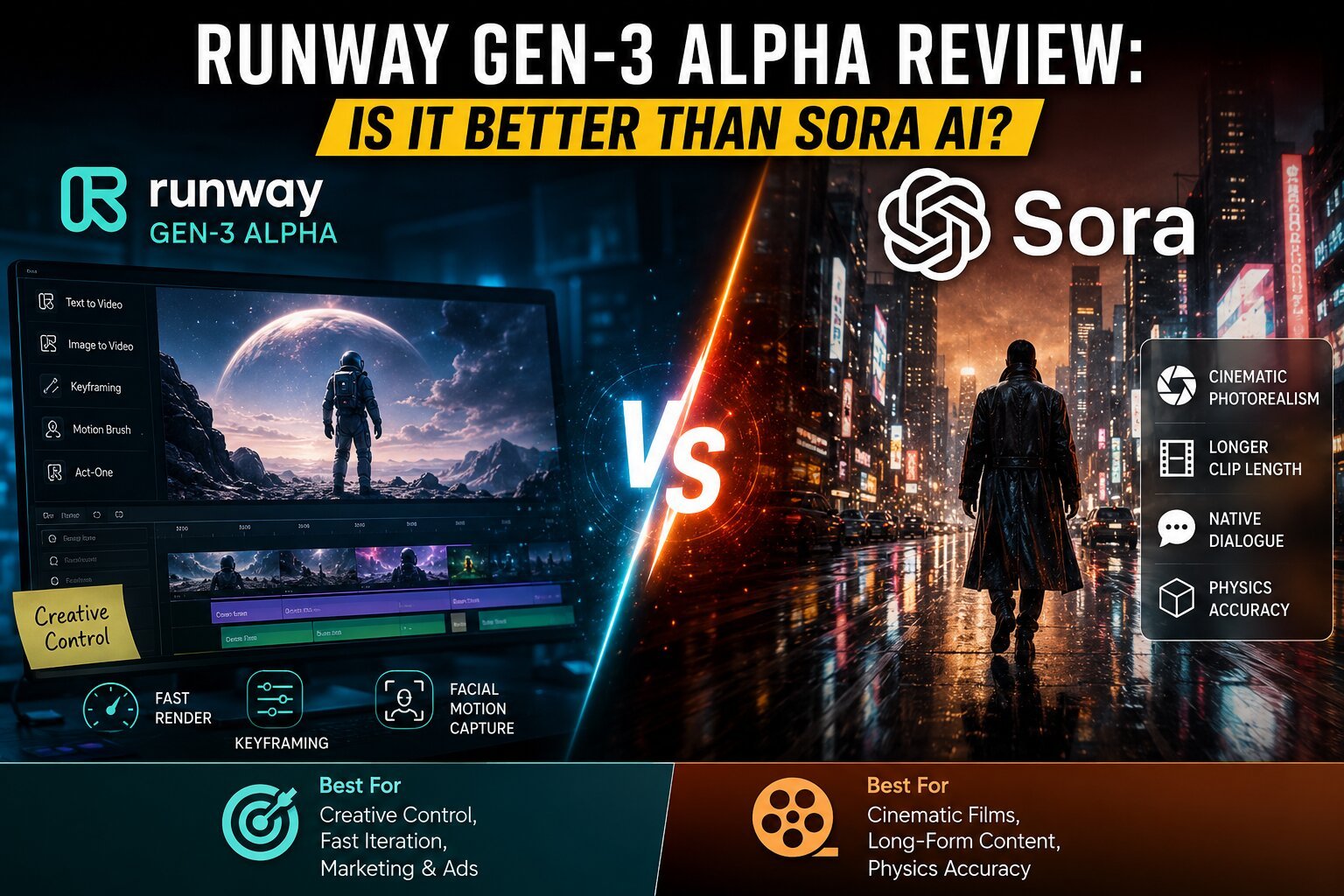
When it comes to raw photorealism and spatial intelligence, OpenAI’s Sora sets the benchmark. Sora functions like a physics engine under the hood, accurately calculating depth, lighting reflections, and complex object interactions.
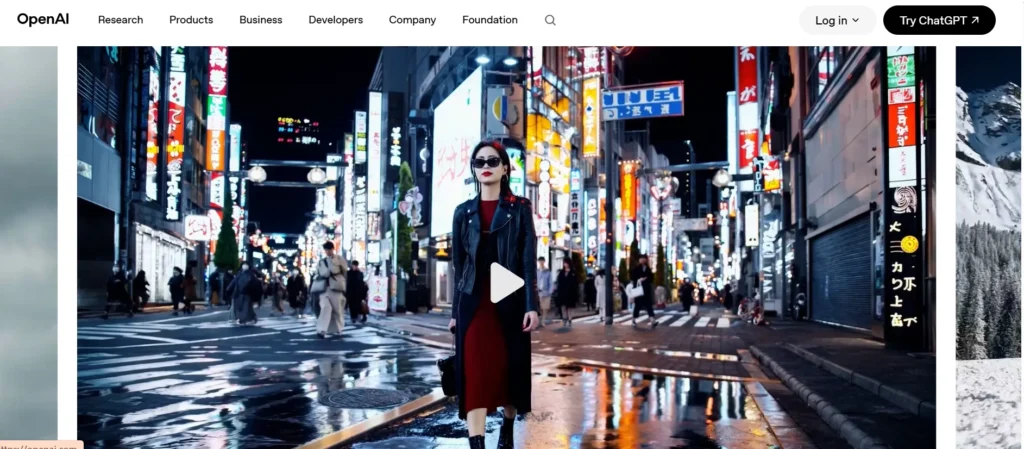
A character walking down a rain-slicked city street maintains consistent anatomy, and the puddle reflections update dynamically.
Runway Gen-3 Alpha, particularly the Gen-3 Alpha Turbo variant, has made staggering leaps in fidelity. It excels at stylized content, high-end commercial aesthetics, and fast action sequences.
However, on longer, hyper-detailed shots, it remains slightly more prone to minor visual anomalies—like objects subtly morphing or fine textures losing clarity over extended frames.
Quality: Sora takes the crown for cinematic narrative films where flawless physics are non-negotiable. Runway Gen-3 Alpha is the go-to for vibrant, stylized commercials, social media visual effects, and dynamic concept art.
2. Granular Creative Control (The Runway Advantage)
A beautiful generation is useless if you cannot edit it. This is where Runway Gen-3 Alpha truly shines. It isn’t just a generation box; it is a full-fledged creative suite designed to fit right into post-production pipelines.
- Advanced Multi-Keyframing: You can anchor your generations by providing first, middle, and last frames, giving you precise control over how a scene transitions.
- Act-One Feature: This game-changing feature allows you to map real facial expressions from a single camera video onto an AI-generated character, removing the need for expensive motion-capture rigs.
- Motion Brush & Directives: Point-and-click tools let you direct exact movement paths for specific elements within a frame.
OpenAI’s Sora relies primarily on text prompts and architectural API adjustments. While its Native Character API offers incredible visual consistency across scenes, it lacks the tactile, timeline-based editing controls that Runway provides right inside the user interface.
3. Rendering Speed vs. Clip Length
In creative industries, time is currency. The choice between these two platforms often comes down to your rendering window and necessary clip duration.
| Performance Metric | OpenAI Sora | Runway Gen-3 Alpha (Turbo) |
|---|---|---|
| Max Single Clip Length | Up to 20 seconds | Up to 10 seconds |
| Extended Video Capability | ~120 seconds (via extensions) | ~40 seconds (via chaining) |
| Average Queue & Render | 3.2 – 5.0 mins (Heavy compute) | 1.5 – 2.5 mins (Fast iteration) |
| Audio Capabilities | Native dialogue blocks | Silent (Requires external tools) |
If you need to pitch an idea to a client before a lunch meeting, Runway’s rapid iteration cycle makes it an invaluable asset. If you need a sweeping, uninterrupted 20-second cinematic master shot, Sora is worth the longer render wait time.
4. Workflows, Pricing, and Accessibility
Runway offers a mature, highly accessible, tier-based credit subscription model with collaborative team features. It also provides a robust REST API for enterprise developers looking to automate high-volume content workflows.
OpenAI’s Sora targets deep integration within the OpenAI ecosystem and premium API distribution networks. Its pricing structure scales based on resolution tier and processing priority, making it highly cost-effective for enterprise-scale batch processing, though it demands a higher financial barrier to entry for individual creators.
Final Recommendation: Which Should You Choose?
Choose Runway Gen-3 Alpha if:
- You work in commercial video production with tight, fast-turnaround deadlines.
- You require explicit frame-by-frame control, keyframing, and facial expression mapping.
- You want a web-native platform with built-in timeline editing tools.
Choose OpenAI Sora if:
- Your primary focus is long-form narrative cinema requiring deep physics accuracy.
- You need native character consistency across diverse scenes and lighting setups.
- You are building specialized applications that lean heavily on robust batch API processing.
Frequently Asked Questions (FAQ)
What is the main difference between Runway Gen-3 Alpha and Sora AI?
The main difference lies in their design focus: OpenAI Sora is optimized for long-shot cinematic photorealism and accurate physics simulation, while Runway Gen-3 Alpha prioritizes rapid creative control, fast iteration speeds, and granular editing tools like keyframing and facial motion capture.
Can Runway Gen-3 Alpha generate audio or dialogue?
Standard video generations in Runway Gen-3 Alpha are silent. However, Runway regularly rolls out suite updates, including companion AI audio and speech tools, to handle sound design. OpenAI Sora features native dialogue blocks for synchronized text-to-speech outputs.
Which tool is better for commercial and social media marketing?
Runway Gen-3 Alpha is generally superior for day-to-day marketing and social media because of its fast rendering speeds, flexible aspect ratios, and timeline editing interface. It allows marketing teams to prototype, tweak, and export multiple variations within minutes.