The AI Quest - Explore. Compare. Master the AI Era.
Latest Blogs

Explore. Compare. Master the AI Era.
Explore. Compare. Master the AI Era.
If you are planning to start a blog in 2027 or want to get Google AdSense approval for your website, you may have one important question: Can you use AI tools like ChatGPT, Gemini, or Claude to write blog posts and still get AdSense approval?
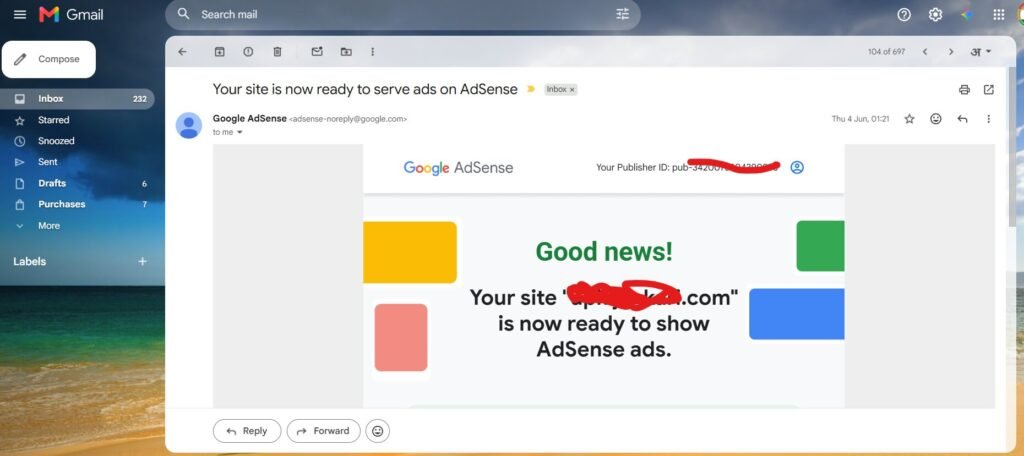
The simple answer is Yes, you can get Google AdSense approval with AI-generated content. Google does not mind whether you write an article yourself or use an AI tool. What matters most is whether your content provides useful and helpful information to readers.
However, generating articles with AI and publishing them without checking or editing is not a good approach. If your content is incomplete, repeats information already available on other websites, or does not solve readers’ problems, your website may face difficulties getting AdSense approval.
Let’s understand how to use AI content properly and improve your chances of getting Google AdSense approval in 2027.
AI content refers to articles, images, videos, or other digital material created with the help of Artificial Intelligence tools.
Today, tools like ChatGPT, Gemini, Claude, and Jasper can help you prepare a blog post draft within minutes.
In blogging, AI content is generally created in three ways.
Raw AI Content: This is when you ask an AI tool to write a complete article and publish its response directly without making any changes.
AI-Assisted Content: In this approach, you use AI for ideas, outlines, or an initial draft. Then, you edit the content, check the facts, improve the language, and add your own experience.
Programmatic AI Content: This involves using code and automation to create hundreds or thousands of pages automatically.
Using any of these methods does not automatically create an AdSense policy issue. What really matters is the quality and purpose of your content.
Yes, Google AdSense can approve websites that publish content created with the help of AI.
Google does not completely prohibit the use of AI for content creation. However, creating large numbers of low-quality articles just to improve search rankings can fall under spam practices.
For example, if you ask ChatGPT to write 50 articles and publish all of them without checking or editing, it will not automatically improve your website’s quality.
On the other hand, if you use AI to prepare an initial draft and then add your own research, experience, accurate examples, and useful information, you can create valuable content for readers.
So, remember one thing: AdSense approval is not about whether your content is written by AI or a human. It is about the overall quality of your website.
Google allows the use of AI and automation for content creation. However, using these tools to manipulate search rankings or generate large amounts of low-quality content is not acceptable.
Google focuses on Helpful Content and the E-E-A-T principles.
E-E-A-T stands for:
For example, if you are writing about AI tools, do not simply list their features. Try the tools yourself and explain how they work, what you like about them, and where they need improvement.
This gives readers useful information that they may not find in a general AI-generated article.
If you want to use AI for blogging in 2027, keep these points in mind.
1. Add Something New to Every Article
Hundreds of articles may already exist on the same topic. Simply changing a few words will not make your article valuable. Add your own research, examples, and a fresh point of view.
2. Always Check AI-Generated Information
AI tools sometimes provide incorrect statistics, outdated features, or inaccurate facts. Verify important information before publishing it.
3. Edit the Content in Your Own Language
AI-generated drafts can sometimes sound robotic or repetitive. Edit them using simple, natural language so readers can easily understand every point.
4. Add Your Own Screenshots and Examples
If you are writing about software, apps, or AI tools, include screenshots and examples from your own experience.
5. Create Important Website Pages
Your website should have essential pages such as About Us, Contact Us, and Privacy Policy. You can also add a Terms and Conditions page according to your website’s needs.
Sometimes, even a well-designed website does not get AdSense approval. The reason may not be limited to article quality. Other website issues can also affect the review.
| Rejection Reason | What It Means |
|---|---|
| Low Value Content | The content does not provide enough useful information to readers. |
| Thin Content | Articles are incomplete or do not properly explain the topic. |
| Repetitive Content | Multiple articles repeat the same information. |
| Navigation Issues | Website menus, categories, or links are not working properly. |
| Policy Issues | The website contains content that violates Google’s policies. |
Remember, publishing a 300- or 400-word article does not automatically mean your website will be rejected. Similarly, a 2,000-word article is not necessarily useful for AdSense.
What matters is whether your content properly covers the topic and answers the reader’s questions.
Instead of treating AI as your complete writer, use it as an assistant.
Here is the process we recommend for preparing blog posts.
This approach can help you create better content in less time.
Before submitting your AdSense application, review your website using this checklist.
One more thing: Having 20 or 25 articles is not an official requirement for AdSense approval. Google has not specified a fixed number of articles for approval.
Instead of focusing on the number of posts, concentrate on publishing useful and high-quality content.
Using AI for blogging has several benefits, but there are some limitations too.
Pros:
Cons:
Absolutely! You can use AI to write blog posts and get Google AdSense approval in 2027. You do not need to type every article yourself.
However, generating articles with AI and publishing them directly is not a good blogging practice. You should check whether the information is correct and whether the article actually helps readers.
Our suggestion is to use AI for ideas, research assistance, and preparing initial drafts. Before publishing, add your own understanding, experience, and accurate information.
At the end of the day, Google is interested in the quality of your website, not which tool you used to write your articles.
1. Can I get AdSense approval for articles written with ChatGPT?
Yes. You can get AdSense approval for articles created with ChatGPT, provided they contain useful and accurate information and follow Google’s policies.
2. Can AI content affect Google search rankings?
Using AI alone does not hurt search rankings. However, low-quality, incomplete, or mass-produced spam content can negatively affect your website’s search performance.
3. How many articles do I need for AdSense approval?
Google has not specified a fixed number of articles. Publishing 20–25 quality articles can be a useful target, but it does not guarantee approval.
4. Can I use AI-generated images on my website?
Yes, you can use AI-generated images on your website. Make sure they are relevant to your article and do not violate anyone’s rights.
5. Can AI-written articles appear in Google AI Overviews?
Yes. Articles created with the help of AI can also appear in Google AI Overviews. The content should be accurate, useful, and provide clear answers to readers’ questions.